The Insulation Is The Container!
To make a digester which is cubic, each of the six polysty panels should be square…
Do you want to know how can you cut polysty and make these insulated boxes? To get started, see
this video.
Poly-Panel Digesters: US-Climate Ready, DiY, Best-in-Class Digesters!
Poly-panel digesters are a completely new type of biogas digester, based on ideas and experiments undertaken during the last decade. This class of digester uses polystylene rigid foam insulation) + plywood + support wood, welded and screwed together into panels (see below). Six of these make a hermetic box that contains the digestion process.
Polypanel digesters are designed to be low-cost, DiY-friendly, and easily heated, making them suitable for use in various climates. They are designed based on the relevant science, and so they have features not seen in other small digesters, such as robust agitation and providing filtrate from the digesting slurry to inoculate incoming organic matter and increasing the percentage of solids in the slurry. These features tend to make the digestion start faster and complete faster, and increasing the percentage of solids means that more organic matter is in the slurry, so the daily increment of biogas production is likely to be higher.
The current focus of my work is a small digester— the polypanel household digester, PPHD (145 gallons)— that can handle the waste from a family of four-to-six adults. Anything you might need to build the basic box is available from your nearest Home Depot, Lowe’s or other similar store. (Electronics for controlling heating and for tracking various parameters are not found in such stores, but they are widely available and inexpensive.)
I expect to have plans for this digester available by mid-October 2026, and to be offering workshops to teach people how to build them.
Sign up to be notfied! (Look to the right)
PPHD (Explained with Images)
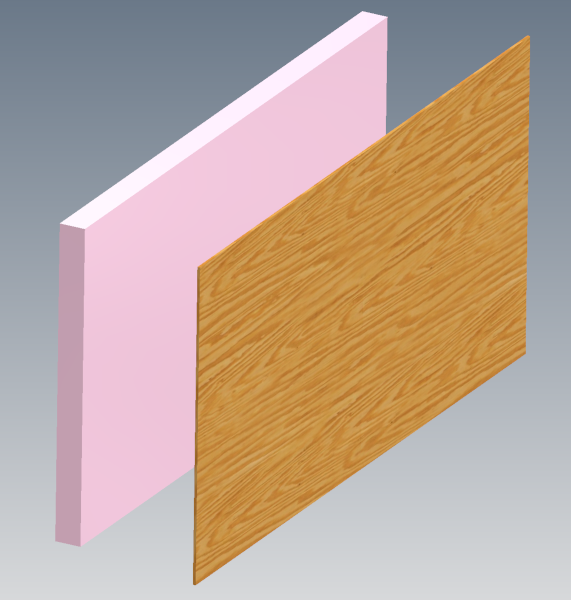
The Polypanel Household Digester! Polypanel? The video above gives the basic idea: the insulation is the container. Polystyrene can be easily, cheaply and strongly welded to polysty to make a box. Each panel has protective plywood on the outside, with polysty inside, shown here in the simplest version: (pink) rigid polystyrene foam insulation and the outside plywood. This is the most basic sort of 'polypanel', but in actual use, the panel would need some support wood as well (2x4s and 1x3s), because water pressure will make a polystyrene box deeper than about 18 inches want to be round, and it will burst.
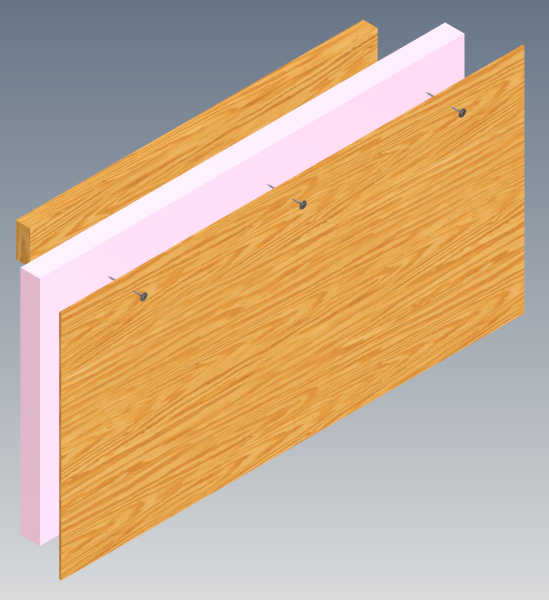
A “real-world” polypanel is made from rigid foam insulation, fronted by plywood, and supported by cheap wood. The only ‘support’ wood shown in this image is at the top: a 2x4 inside and three screws with washers outside, screwed together to help hold the plywood to the polysty.
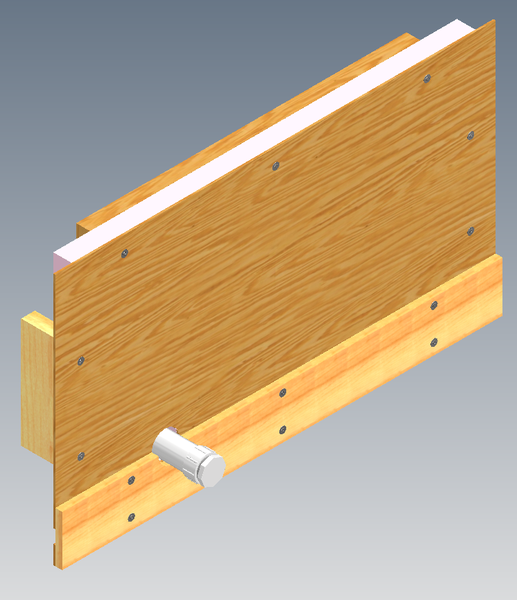
Polypanel: Here you can see what the actual right-side panel looks like. Not only does it have support wood on the top, but as well on both sides and the bottom. As well, and finally, the right side has the digester drain, the white pipe down at the bottom.
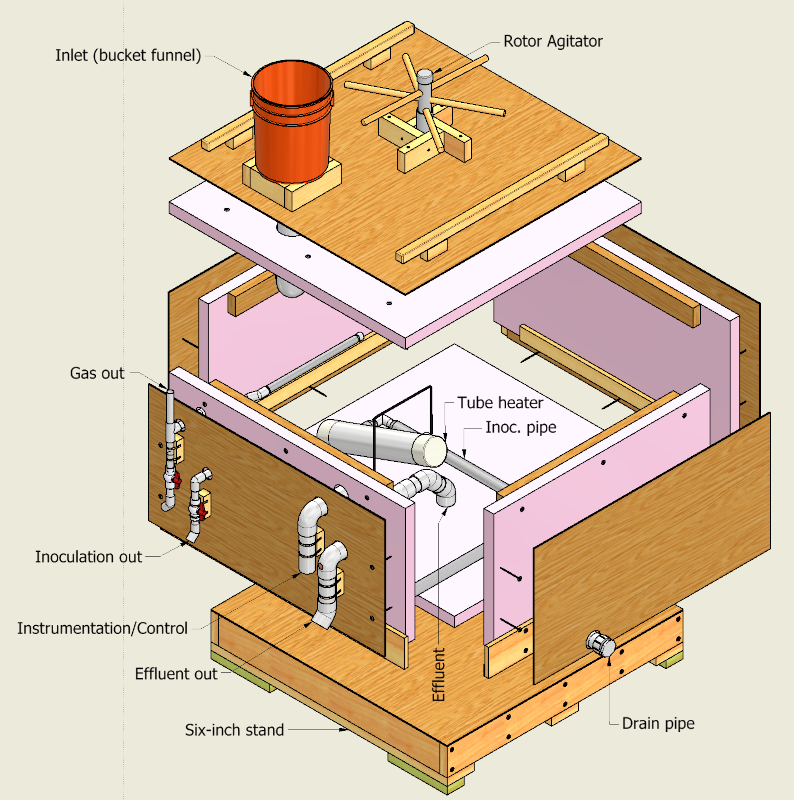
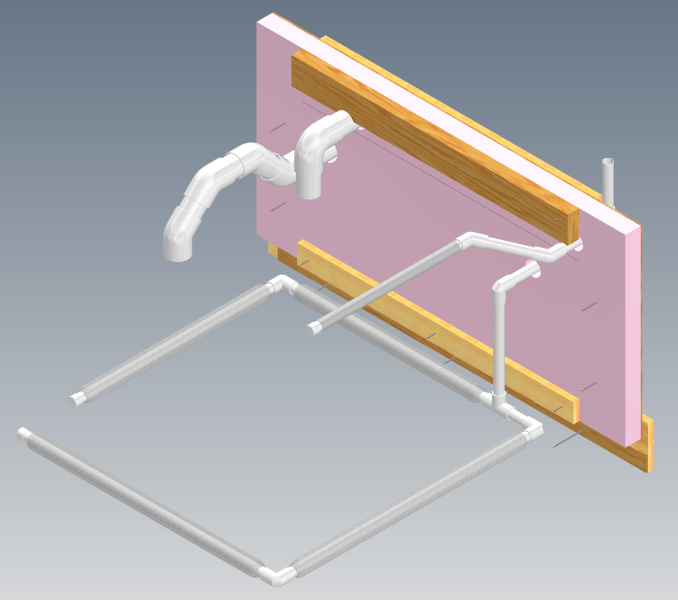
The most complex panel is in the front of the digester, seen here as it might look before installation on the digester. From right to left you can see the effluent out pipe, the instrumentation pipe, the liquid (filtrate) collection pipe system (explained below) and the gas collection pipe.
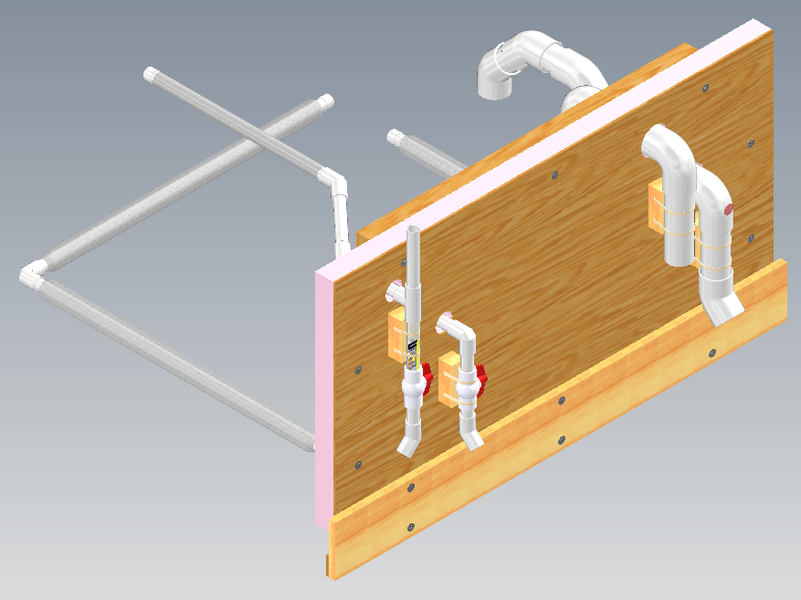
Here is the inside face of the front panel, showing (left to right) the effluent out pipe, the instrumentation pipe, the liquid (filtrate) collection pipe, and the gas collection pipe.
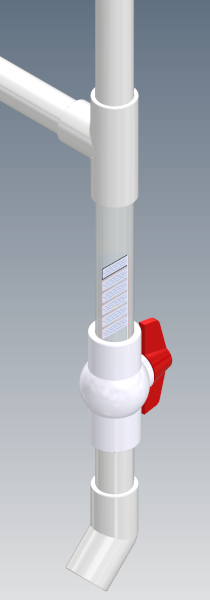
Gas collection pipe showing that its lower portion is clear PVC. Precipitation accumulates and fills up the clear section. Open the valve to drain it...
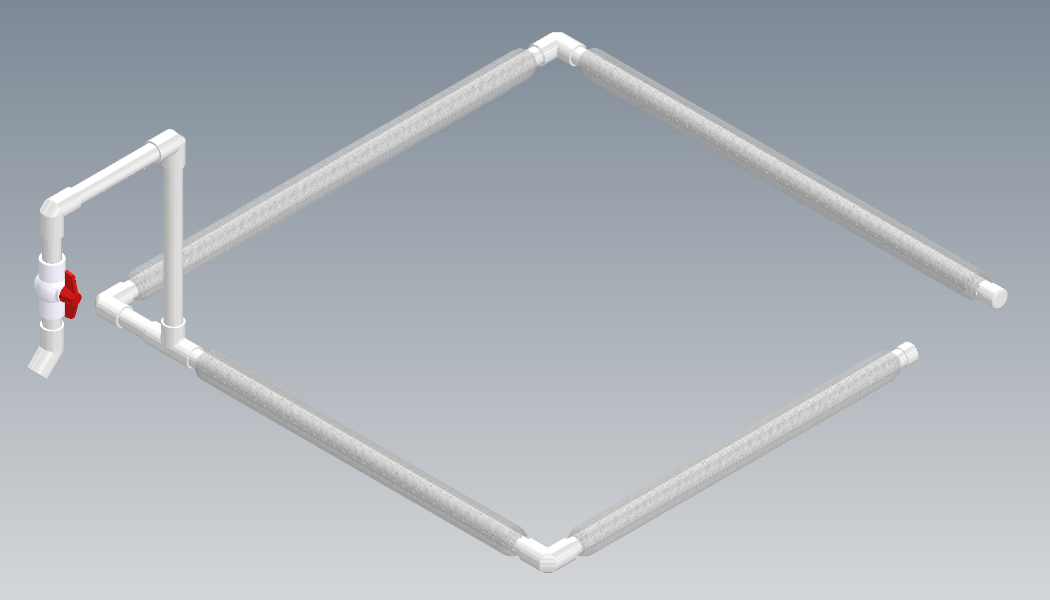
The liquid collection pipe system filters effluent and provides the liquid to an outlet. From there it can be collected (turn the red-handle on the valve), which allows %solids to increase, and gives liquid to mix with incoming food waste, thereby inoculating it.
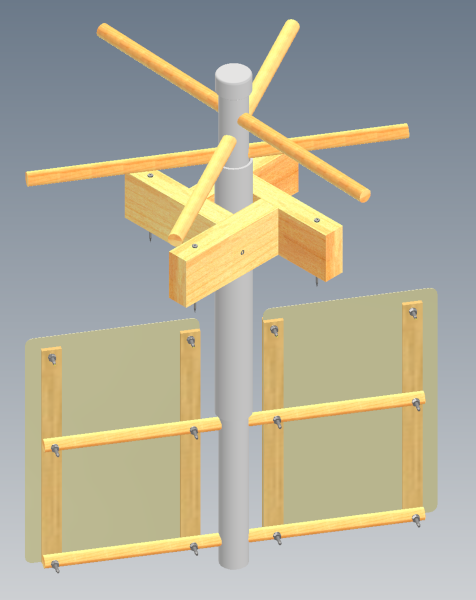
The top has both the slurry inlet and a robust but surprisingly low-cost agitation system that promotes vigorous digestion.
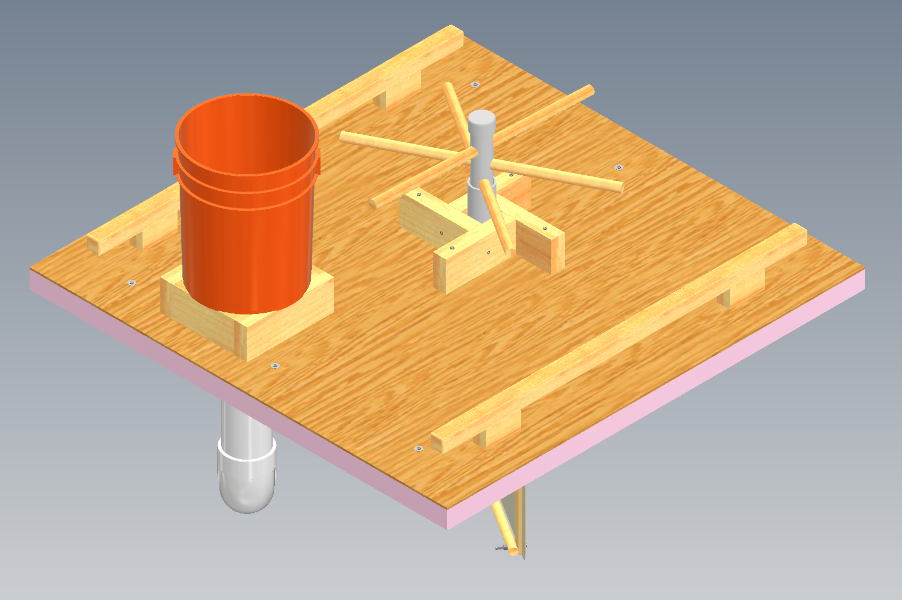
The agitator sweeps a circular path which is about 75% of the container's length/width, and has a vertical reach which starts near the top of the slurry volume and continues to within a few inches of the bottom.
Introducing The PPHD: Your first Poly-Panel Digester
Put it all together— the top, bottom and four sides (plus a few things)— and you have a polypanel digester; in this case, the PPHD. The top has the agitator and the slurry inlet, the right side has the drain, and the front has the gas collection pipe, the liquid collection/inoculation pipe, the instrumentation pipe, and the effluent pipe.